People Read Faster With Longer Lines, but They Prefer Shorter Ones
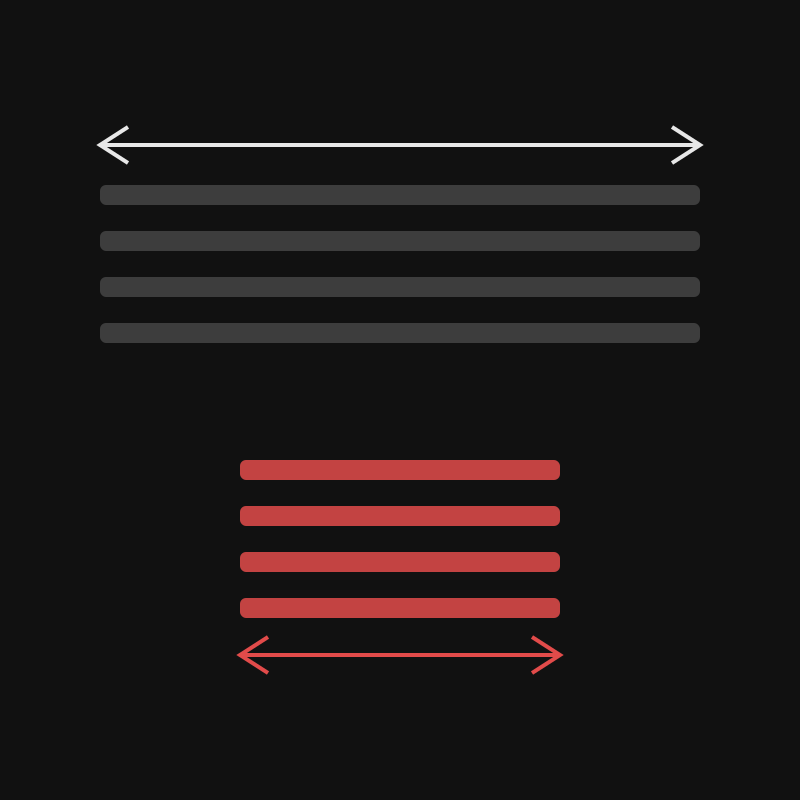
A counterintuitive finding. Research shows that long lines, around 100 characters on screen, are read fastest, while people prefer short or medium lines. Stranger still, ask people which length is faster and they'll say the short one, the opposite of what the data shows.
The reason is eye movement. The eye doesn't glide along a line; it moves in jumps and pauses, and every line ending breaks that sequence and forces a new start. Short lines multiply these breaks across the text, which slows reading down even when it feels comfortable.
So the question isn't which length is better, but which one serves your goal. A rushed audience looking for quick information is served by longer lines, because they read faster. Content you want to tempt people into reading by choice is served by shorter lines, because they're comfortable and keep readers on the page.
One description, two line lengths
A product page in two versions, with the same description. On the right, short lines stretch the description over six lines; on the left, longer lines fit it into four. Neither is better in absolute terms; the choice follows the page's goal.
A note on the limits
Characters-per-line figures come from studies of Latin script and don't carry over to Arabic as they are. Arabic letters are connected and narrower, so the same width holds a different number of characters. It's more reliable to measure line length by the column width that suits your device and audience than by a character count borrowed from another language.